
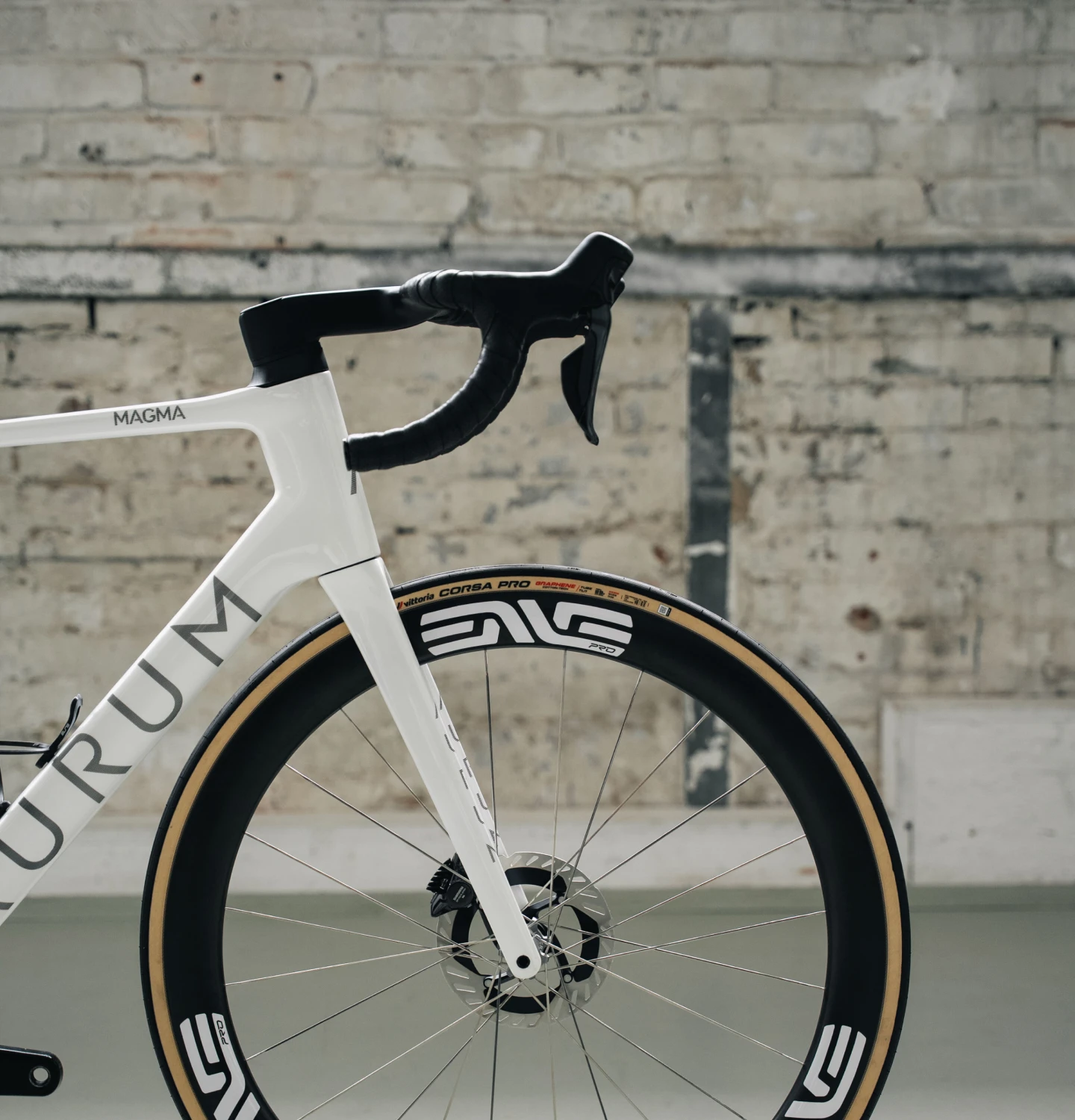
Most bicycles become loud long before they become good.
The industry rewards visibility aggressively. More integration. More speed signals. More radical surfaces. Every season demands another reason to appear newer, faster and more advanced than the one before it. Performance slowly turns into theatre. Certain bicycles no longer seem designed to ride well over time, but to communicate performance immediately - through shape, specification and first impression.
That urgency changes how bicycles are built.
And eventually, it changes how they feel.
A bicycle can carry the most expensive components available and still feel cheap instantly. Usually the problem is not quality itself. It is proportion. The relationship between decisions. One wrong detail can collapse the entire object. A spacer stack that never belonged there. An overbuilt cockpit searching too hard for aggression. A hyper-optimized component destroying the calmness of the overall system.
The rider immediately feels when something is unresolved. Not mechanically. Culturally.
Certain bicycles reveal insecurity very quickly. They constantly try to prove themselves. More visibility. More aero claims. More performance language. More confirmation that the object deserves attention. But confidence rarely behaves this way.
Classic frame proportions still feel powerful partly because they no longer need to explain themselves constantly. They carry enough authority to remain calm. The same is true for certain brands. They understand restraint well enough to leave space around the object instead of filling every surface with stimulation.
That restraint becomes increasingly difficult once markets start rewarding attention above judgement.
It takes discipline to leave things alone.
Especially in cycling, where optimization easily becomes addiction. One more integrated part. One more marginal gain. One more visible signal of seriousness. Yet many bicycles slowly lose their coherence precisely through this accumulation of intention. They stop feeling directed and start feeling negotiated.
The strongest systems rarely feel accumulated.
There is clarity in them. Not because every component disappears, but because each decision accepts its role within the larger object. Dominance is controlled carefully. Colours settle naturally into proportion. Materials support each other instead of competing for visibility. Nothing feels added purely to force attention.
Taste often reveals itself through the decisions nobody notices immediately.
The expensive titanium axle.
The correct headset cap.
The choice to remove a spacer permanently instead of protecting resale value.
The willingness to buy tools nobody will ever praise publicly.
These decisions rarely generate attention because they are not performed socially. They exist for the relationship between rider and object itself.
That is why real taste is often quieter than luxury.
Luxury wants recognition.
Taste wants precision.
The difference becomes obvious over time.
Many bicycles are built to create immediate reaction. Very few continue feeling convincing years later. Trends age quickly because they depend on relevance externally. The bicycles that remain interesting usually operate differently. They never chased approval aggressively in the first place.
They simply understood proportion well enough to survive changing taste around them. That applies to brands as much as bicycles.
Some companies constantly follow whatever currently feels culturally successful. The visual language changes every season. Shapes become more exaggerated. Messaging becomes louder. Identity becomes unstable because attention itself becomes the strategy.
Others hold their line longer.
Not because they reject progress, but because they understand that cultural authority is built through consistency of judgement over time. They know that not every performance gain deserves visibility. Not every trend deserves adoption. And not every rider needs to be convinced immediately.
At a certain point, taste becomes the ability to recognise what should remain untouched. Not because it is nostalgic. Not because it is safe. But because unnecessary change often reveals uncertainty long before innovation does.
The strongest bicycles rarely ask for admiration directly. They allow the rider to discover the depth of the object slowly instead. And usually, that feeling lasts much longer than spectacle ever does.