
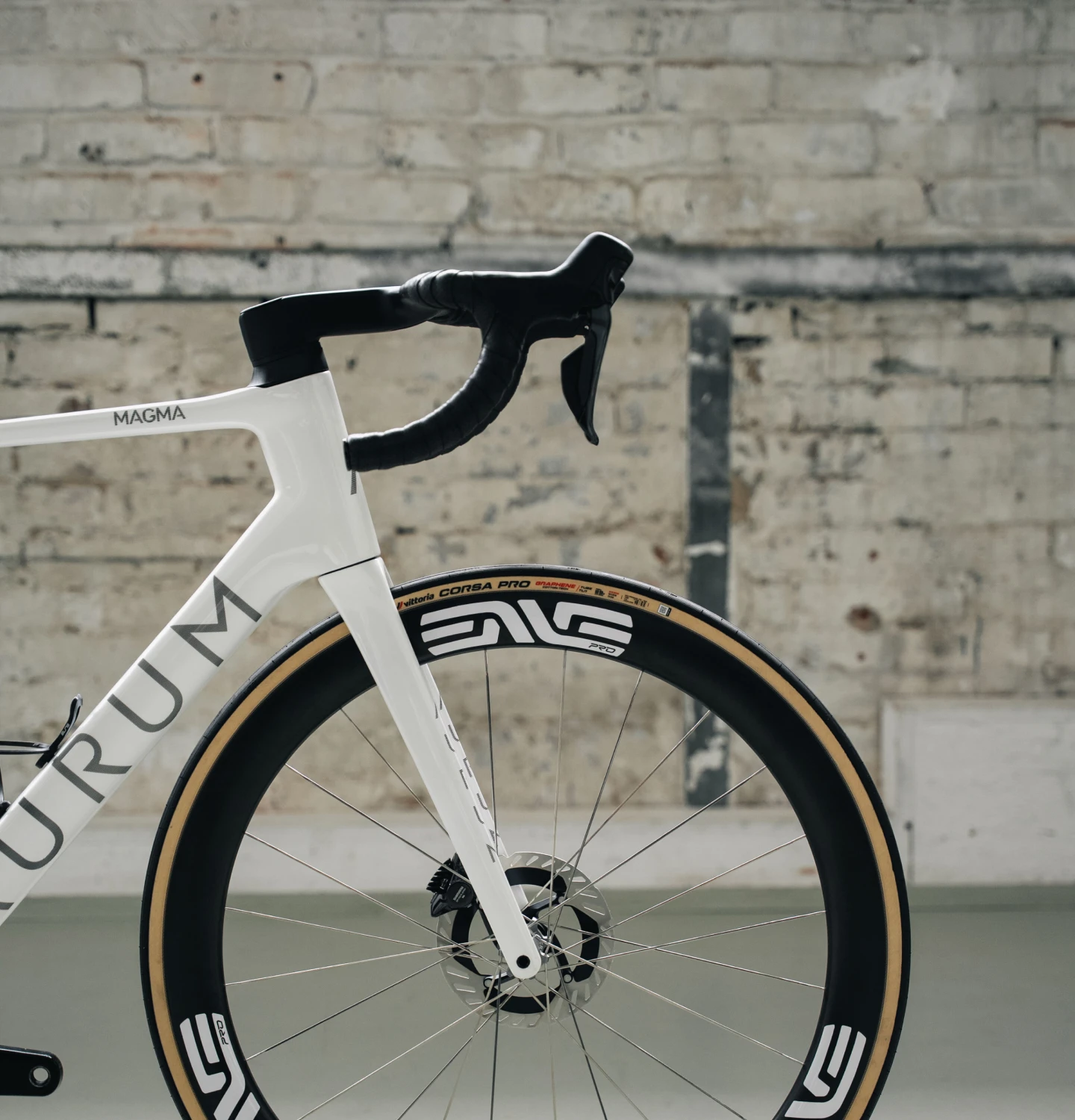
A lot of bicycles today are built around products. Around categories, trends and measurable gains that are supposed to define performance. Faster wheels. Stiffer frames. Lower weights. More integration.
The industry has become extremely good at optimizing parts. Most modern bicycles are already operating near the limits of measurable performance. What separates them now is rarely speed alone, but how coherently that speed can still be carried over time.
Because riding a bicycle never happens in isolation. The rider changes the bike. Terrain changes the bike. Fatigue changes the bike. Small decisions completely alter how a bicycle behaves after hours under tension.
A few millimeters change confidence. Tire pressure changes rhythm. Wheel depth changes stability in crosswinds and at speed. Some bicycles feel impressive for twenty minutes. Very few still feel composed once posture, breathing and focus slowly begin to fade.
True performance is often much quieter than the industry wants it to be. Not just acceleration. Not just stiffness. Not numbers in isolation.
A bicycle that remains predictable deep into a ride. A front end that still feels calm after four hours. A position that preserves energy instead of constantly asking the rider to compensate. Speed that feels sustainable instead of nervous.
Most bicycles today are fast enough. What often disappears is coherence.
The feeling that everything is working together naturally instead of competing for dominance beneath the rider. That is why no decision exists on its own. Geometry, fit, wheel choice, tire construction, pressure and balance continuously shape each other. Together, they define the character of a bicycle far more than any individual component ever could.
Creating that feeling takes patience. Observation. Experience. It takes testing, restraint and a willingness to care about details most people overlook. Sometimes the better decision is not the most expensive one. Sometimes speed comes from reducing tension instead of adding aggression.
Cadence approaches bicycles the way a sailmaker approaches wind: through feel, balance and adjustment. Small refinements change how energy moves through the entire system. The goal is never to create a bicycle that demands attention at first glance, but one that continues revealing itself over time.
At a certain point, a bicycle stops feeling assembled. It starts feeling coherent. Natural beneath the rider.
As if the decisions within it are no longer visible individually, only felt together. That is where nuance begins to matter. This does not make bicycles softer or more romantic. It is simply that the smallest details begin to shape how a rider moves through speed, fatigue and space.
Cadence exists to shape those relationships deliberately - through precision, curation and a deep respect for how a bicycle should actually feel beneath a rider.