
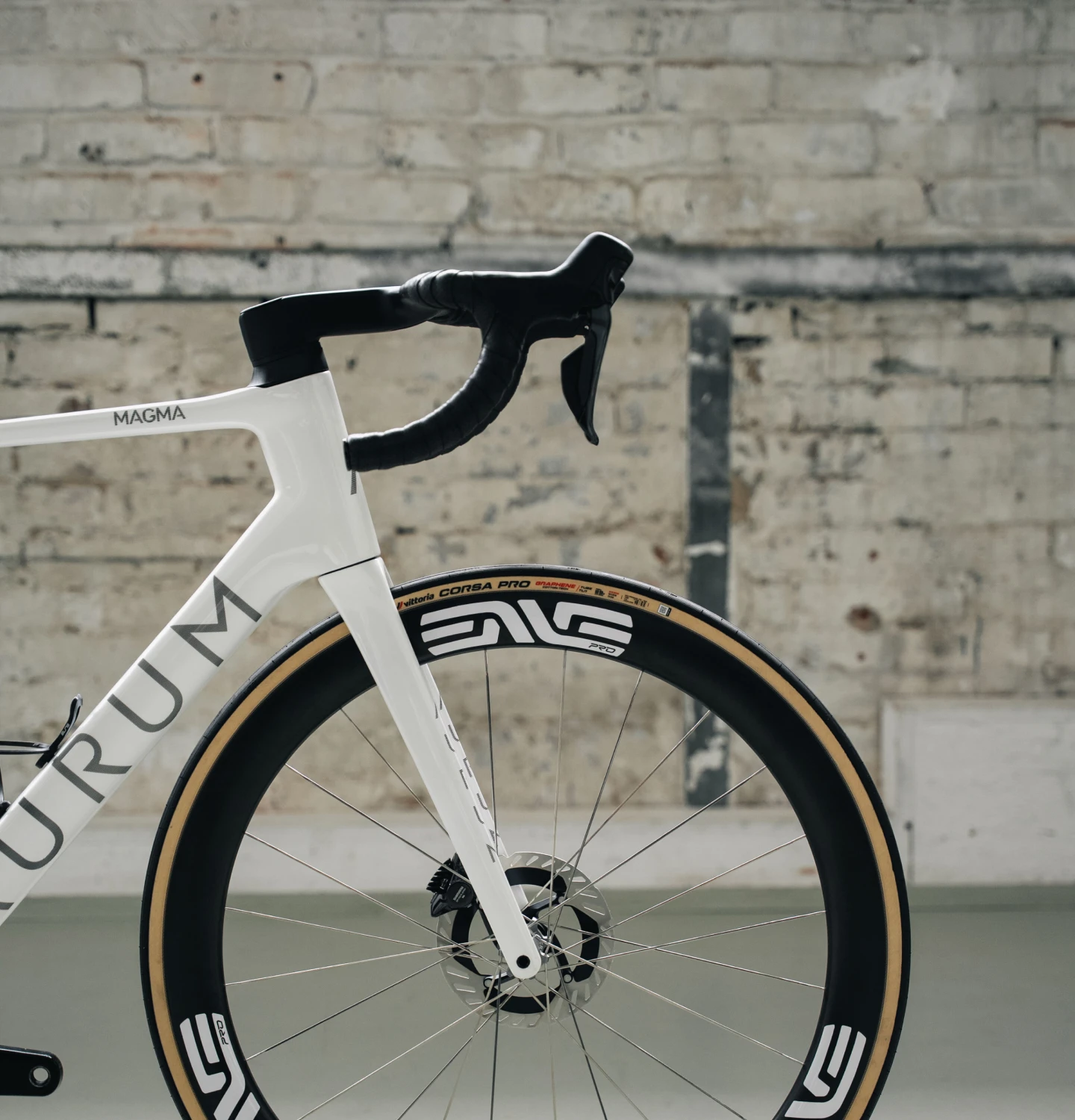
Performance is rarely experienced objectively.
Two riders can sit on the same bicycle and leave the ride with completely different impressions of speed, control and effort. Not because the bicycle changed mechanically, but because perception changed underneath it. Confidence changes movement. Tension changes movement. Trust changes movement.
The rider is never separate from the system.
That relationship becomes visible quickly. Some bicycles sharpen awareness the moment speed increases beneath them. Others create distance between rider and surface instead. Certain setups reward precision and complete attention. Others allow rhythm to settle gradually over long durations. Neither response is automatically superior. The question is whether the behaviour feels intentional.
Many modern performance bikes are built around sensation first. Immediate acceleration. Sharp steering. Constant feedback. The rider continuously receives signals that the bicycle is fast, reactive and aggressive. That feeling can become addictive for short durations. It creates urgency. A sense that the bicycle is always asking the rider for more.
But stimulation and confidence are not the same thing.
Some systems become faster as the rider relaxes into them. Others only become fast once the rider increases tension to match the object beneath them.
That distinction becomes harder to ignore once fatigue enters the ride.
After several hours, the body stops hiding problems politely. Breathing becomes less controlled. Posture collapses slightly. Small instabilities become larger ones. A front end that felt exciting early in the ride may slowly start consuming concentration instead. A hyper-reactive wheel may require constant correction once precision begins fading under exhaustion. Certain setups become mentally expensive long before they become physically slow.
The opposite also exists.
Some bicycles begin almost quietly. Nothing immediately announces itself. No exaggerated sharpness. No constant performance signals. Yet the deeper fatigue enters the ride, the more stable the system becomes psychologically. Braking simplifies itself. Attention narrows. Speed stops feeling dramatic and starts feeling sustainable.
A rider who trusts the front tire enters corners differently. Braking points move. Body position changes. Hesitation disappears earlier. Even something as small as handlebar tape can influence how much tension remains inside the hands after five hours. Tire pressure changes more than grip. It changes anticipation. Certain wheelsets calm the rider in crosswinds. Others constantly provoke awareness.
The body notices these negotiations long before language catches up to them.
Presence cannot be reduced to comfort.
Some bicycles should challenge the rider. Certain systems create speed precisely because they demand sharper focus, cleaner timing and greater commitment. A bicycle can feel slightly dangerous and deeply confidence-inducing at the same time. Many of the most memorable bikes operate exactly inside that tension.
The problem begins once aggression loses intention.
Once sharpness becomes identity instead of behaviour. Once bicycles start demanding attention permanently instead of rewarding it selectively. Some modern performance systems feel as if they are constantly performing speed back toward the rider, regardless of whether the situation actually asks for it.
Eventually the ride becomes less about producing isolated moments of speed and more about preserving precision once fatigue starts removing it.
Not during the first acceleration.
Not during the showroom impression.
Later.
Once concentration begins thinning out and the body becomes less disciplined beneath effort, bicycles stop communicating through sensation alone. Some continue asking the rider for energy. Others leave enough untouched that the rider still feels precise hours later.
The difference rarely appears immediately. It appears once fatigue enters the system - and the bicycle finally stops hiding what it actually demands from the body.