Wheel Testing – Harz May 2026
One day. Five riders. Five wheel systems. Six hours in the heat. Trying to understand what wheel systems actually do once riders stop being fresh.
INTRODUCTION
Most wheel tests begin with certainty. Weight. Stiffness. Aerodynamics. Rolling resistance. Most of them end there too. Faster. Lighter. More compliant. More stable. The suspicion behind this project was that the more interesting differences might begin exactly where most testing stops: once riders stop being fresh. Because most modern high-end wheel systems are already objectively very good.
At some point, pure performance numbers stop explaining why certain riders suddenly trust a bike more deeply on one setup than another. Or why one system feels emotionally exhausting after five hours while another quietly disappears underneath the rider and somehow preserves rhythm without ever feeling dramatic. The question slowly shifted. Not: Which wheel is fastest? But: Which systems still work once precision starts disappearing?
Originally planned over two consecutive days in the Harz, the project ended after the first. Five riders spent roughly six hours rotating between five wheel systems under sustained fatigue, repeated climbing, rough asphalt, crosswinds and long descents. The heat added another layer of exhaustion. Rain arrived the following morning, and the group had to leave. No rankings. No laboratory objectivity. No scorecards. Only repeated observation.
THE SYSTEMS
The systems themselves were intentionally chosen to represent different approaches to speed rather than categories of products.
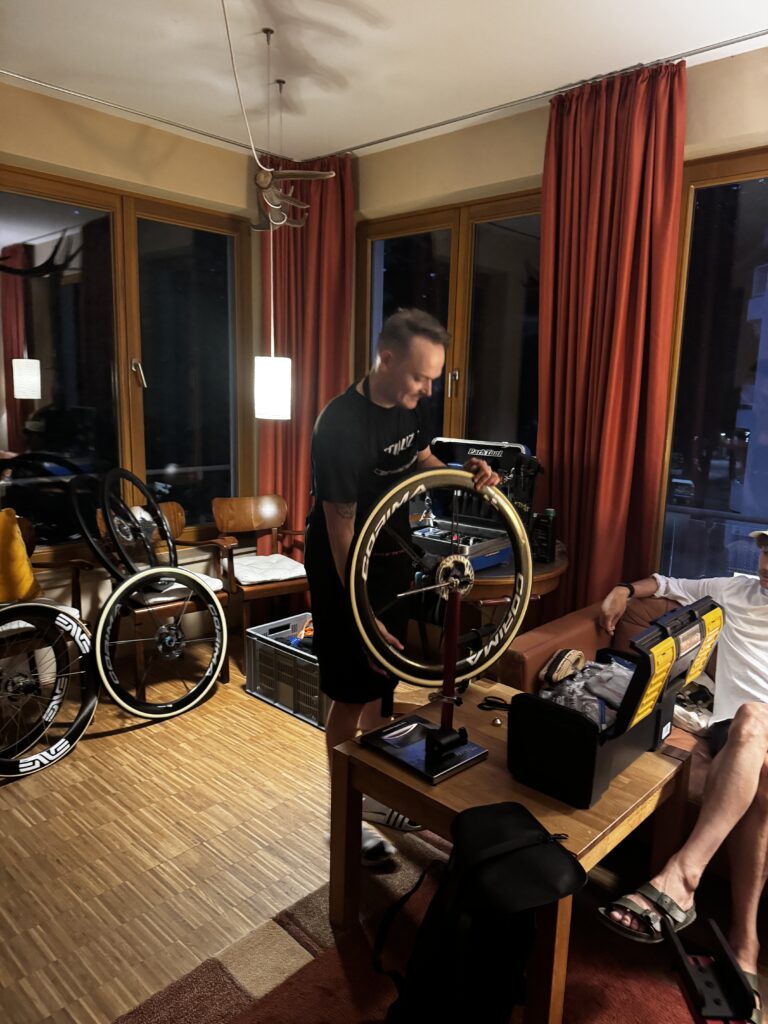
CORIMA MCC DX 47
Carbon spoke construction
Vittoria cotton casing
Tubular setup
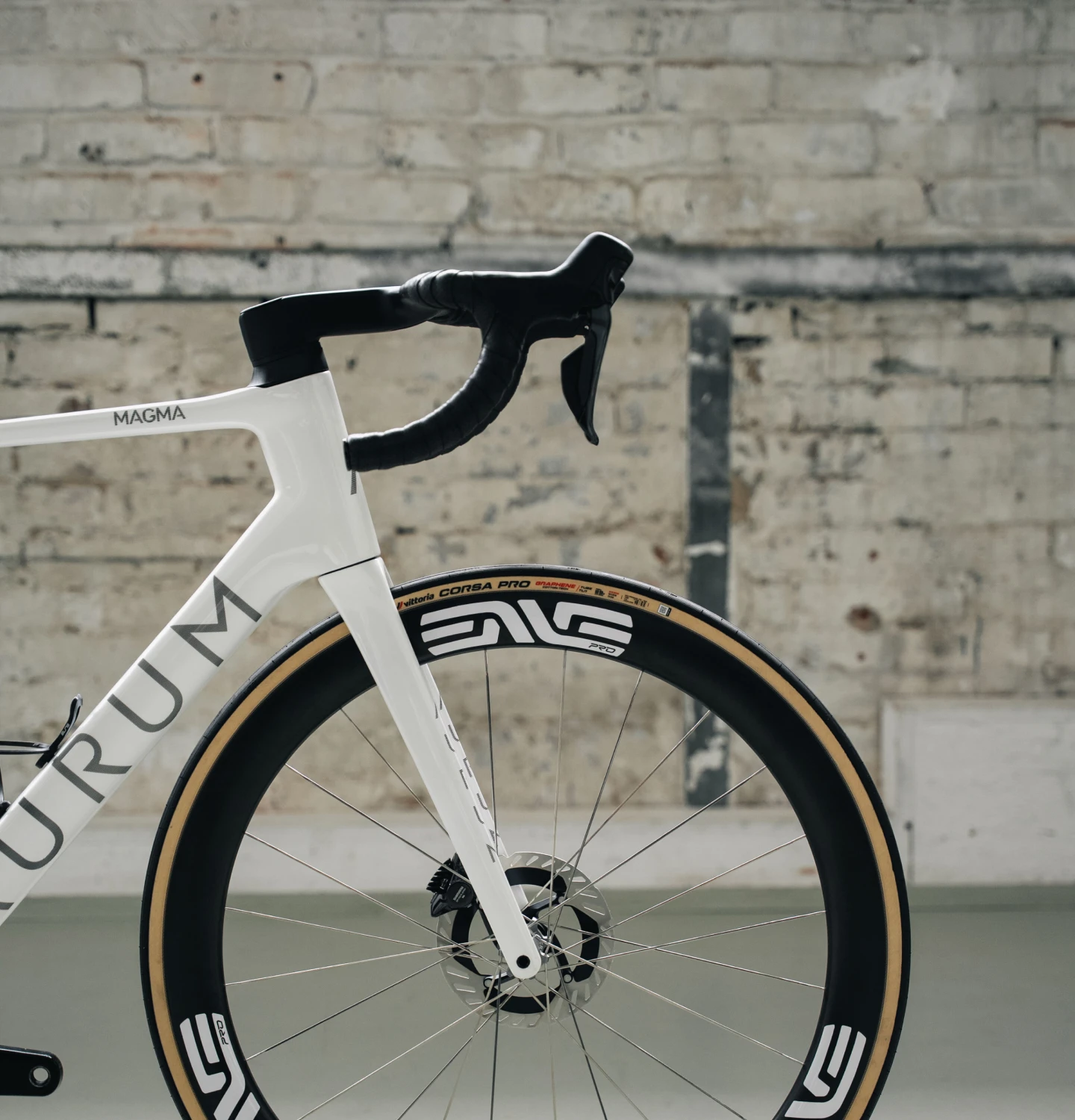
ENVE SES 4.5 PRO
Wide-profile tubeless system
Modern stability-focused construction
Vittoria cotton casing
PRINCETON PEAK 4550
Lightweight construction
Distinctive aerodynamic profile
Direct handling character
Vittoria cotton casing
ZIPP 454 NSW
Sawtooth profile
High-feedback ride feel
Vittoria cotton casing
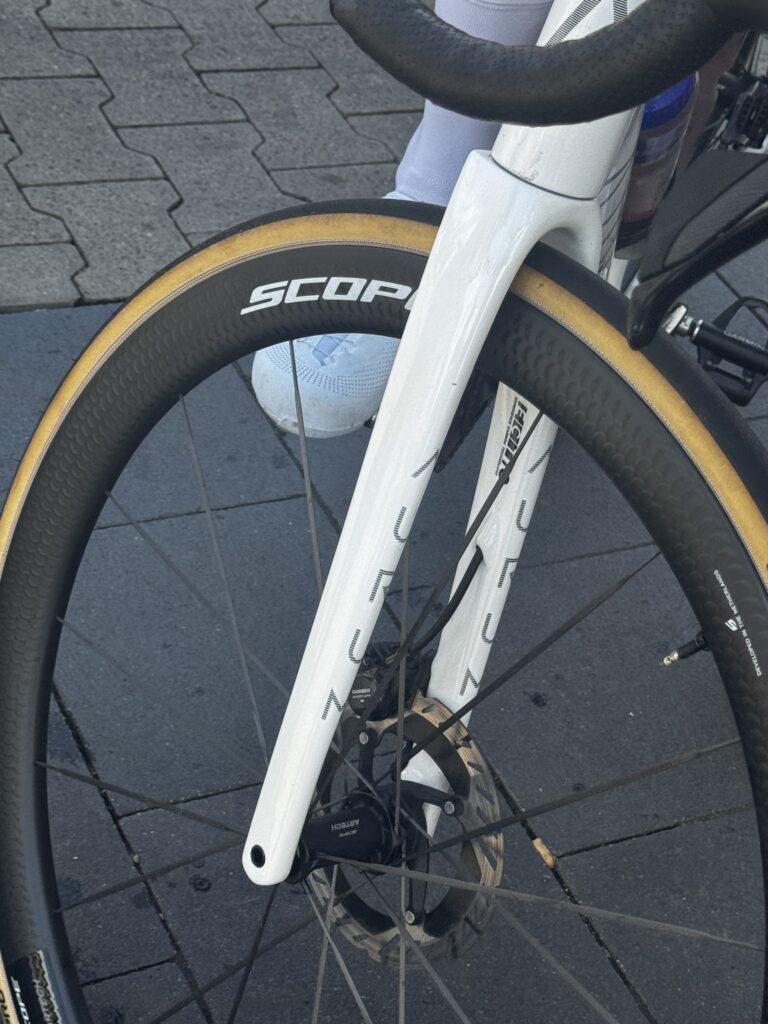
SCOPE ARTECH 4
Integrated aero profile
Ultra-light modern system behavior
Vittoria cotton casing
Originally, six wheel systems were planned. When one rider had to withdraw shortly before departure, the DT Swiss ARC was removed from the comparison. Five riders. Five systems. The intention remained unchanged.
The intention was not to perfectly standardize every variable. The intention was to preserve each wheel system as a coherent idea. Some systems only became understandable after several hours.
THE LOCATION
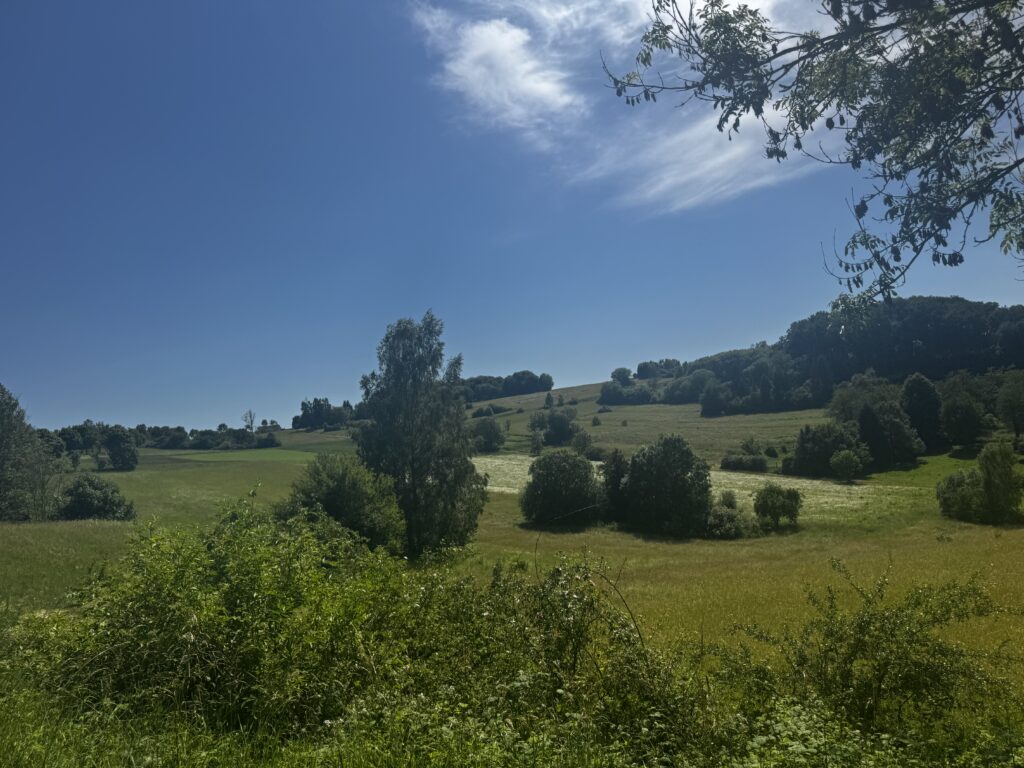
The Harz was chosen deliberately. Its roads constantly interrupt rhythm. They rarely allow complete relaxation. Fast open descents suddenly disappear into darker forest sections. Grip changes. Vision changes. Wind changes. The roads slowly alter how riders hold tension in the bike.
The original plan was to ride for two days. The weather allowed only one.
Roughly five to six hours in unusually high temperatures. Wheel systems rotated every 45–90 minutes. Each change brought another comparison, another opportunity to question an earlier impression.
The wheels were experienced at different stages of the same ride: fresh, partially fatigued, deeply fatigued.
The first impression of a wheel and the impression several hours later did not always have much in common.
THE RIDERS
The group was intentionally small. Not professional testers. Not influencers. Only riders with very different relationships to speed and control. One rider constantly searched for front-end precision and emotional involvement. Another preferred rhythm and calmness over stimulation. One rider immediately noticed instability and steering movement. Another was still developing his technical confidence but knew exactly what made a bicycle feel comfortable and predictable.
Interestingly, the strongest disagreements often appeared between riders who approached the same systems with entirely different expectations.
ANDRE
Relatively new to cycling.
Drawn to aerodynamic efficiency and smooth, predictable handling.
Less technically experienced, with a preference for stability over aggression.
TIMM
Former BMX rider. Aggressive descender.
Technically advanced, with an instinctive understanding of bike handling.
Needs a playful, responsive system. Less endurance-oriented, making changes under fatigue particularly noticeable.
LUKAS
Calm rider. Highly experienced.
Controlled and composed, rarely overreacting to a bicycle.
Prefers a system that challenges him rather than simply making everything easier.
THORBEN
Race-oriented rider. High power output and large torque over sustained efforts.
Sensitive to excess weight, insufficient stiffness and delayed response.
Needs a system that gives something back when pushed.
BERNIE
Very smooth riding style.
High cadence and exceptional upper-body stability.
Minimal unnecessary movement. Often notices subtle differences through rhythm rather than dramatic feedback.
DAY ONE — THE FIRST IMPRESSIONS
The first morning still felt nervous. Freehub sounds overlapping in the parking lot. Half-open jackets. Somebody checking tire pressure three times in ten minutes. Coffee still sitting too high in everybody’s system. Fresh riders tend to confuse stimulation with speed.
The Scope Artech 4 immediately impressed with its lightness. Acceleration felt effortless, the response direct and immediate. Timm described the sensation in three words: forward, light, immediate.
The bicycle itself seemed to require less effort. Particularly when climbing, the difference to heavier-feeling systems was noticeable. Yet the Scope remained sufficiently stable on descents. Direct and agile without becoming excessively nervous.
The Corima created some of the strongest disagreements. For Andre, the wheel offered exactly the stability and predictability he was looking for. It quickly became his favourite system. For others, the experience was very different. Lukas and Thorben initially struggled with the setup, describing the ride as unpleasantly harsh and difficult to enjoy.
The wheel constantly communicated its weight and character back into the rider. It was impossible to ignore.
Timm found the Corima stable but comparatively heavy in its response. Both climbing and descending seemed to require more effort than on the lighter systems. Agile enough, but never particularly playful. He compared the experience to a man in his mid-forties carrying a little extra weight: experienced, dependable, capable in many situations, but still having to carry that weight around.
The Princeton produced a different kind of excitement. The wheel always seemed ready to react to the smallest input: wind, acceleration, vibration, direction change.
Timm appreciated the lightness and directness but found the handling almost too immediate at times. Less forgiving than the calmer systems, though sufficiently stable on descents and surprisingly unaffected by crosswinds. The rolling sensation was good, but comfort was limited.
For Andre, the same characteristics were much less appealing. Both Princeton and Scope felt too nervous, almost like driving a go-kart. What one rider experienced as agility, another experienced as unnecessary movement.
The Enve systems initially almost disappeared. No dramatic reactions. No emotional excitement. Which gradually became suspicious in itself. The front wheel seemed less eager to react to every small input. The entire bicycle felt calmer, almost as though it were running on rails.
Timm initially perceived the Enve as slightly heavier than the other lightweight systems, although he suspected that this impression came from its unusual composure rather than actual weight. The wheel was fast, remarkably comfortable and exceptionally forgiving.
Bernie, already closely connected to the Enve brand, found little reason to question his preference. Andre appreciated the stability but remained less enthusiastic. For him, the Corima still offered something the Enve did not.
The Zipp 454 NSW produced surprisingly little discussion. The wheels remained relatively neutral compared to systems with more distinctive characters. Nobody seemed particularly troubled by them, but neither did they create the same immediate attachment.
Late in the afternoon the differences became harder to separate. The group had already developed clear preferences, but those preferences rarely aligned. What felt reassuring to one rider seemed unnecessarily restrained to another. The group just rolled on.
AS THE DAY WENT ON
As the hours passed, the heat became harder to ignore. The repeated climbs, descents and wheel changes gradually took their toll. First impressions had already been made. Now the question was whether they would survive the rest of the ride.
Some did. Others became more complicated.
The Corima remained one of the most divisive systems. What felt reassuring to Andre continued to feel comparatively heavy and reluctant to others. Lukas and Thorben had initially struggled with the wheel at approximately 5–5.5 bar. Increasing pressure to around 7 bar changed the experience considerably.
The difference was significant enough to question some of the earlier impressions. The wheel itself had not changed. Only the conditions under which it was being experienced.
Even with the improved setup, the Corima never became the preferred system for Lukas or Thorben. Andre, meanwhile, continued to appreciate its stability. Nobody agreed on the Corima. The differences were not simply about speed or experience. They reflected fundamentally different expectations of how a bicycle should behave.
The Scope systems meanwhile became more complicated than expected. Their lightness and immediate response continued to impress Timm and Thorben. Particularly under sustained effort, the bicycle seemed eager to accelerate without demanding unnecessary energy.
The wheels remained: intuitive, agile, responsive under pressure.
Timm appreciated how the Scope combined much of the Princeton's directness with greater stability and composure. The feeling reminded him of his own Roval wheels. For him, the Scope was among the most convincing systems of the test.
Bernie disagreed. Despite the remarkable weight and efficiency, the Scope simply gave him very little emotionally. The performance was there. The connection was not.
Thorben had always appreciated the Scope. Its lightness, responsiveness and immediate acceleration suited the way he rode. It was the kind of wheel that seemed to respond naturally to sustained power and sudden changes in pace.
But the Princeton stayed with him. It reminded him of Lightweight. That same sense of precision and direct connection between rider and road, only without the uncompromising harshness. Responsive without feeling as though it needed to prove its stiffness. For him, the balance felt almost perfect.
The Enve SES 4.5 Pro gradually became one of the most respected systems of the project. Their composure remained remarkable, even as fatigue increased. Riders stopped discussing handling entirely. Conversations shifted toward cadence, pacing, food and route choice.
The wheel itself stopped demanding attention.
Lukas was particularly impressed by the stability on descents. Even through corners, the front end remained so composed that he felt he could almost ride without holding the bars. For someone with his experience, that degree of calmness was remarkable.
Timm reached a similar conclusion from a different perspective. The Enve offered the most complete riding experience of the test. Smooth, fast, forgiving and exceptionally comfortable. What initially appeared to be additional weight gradually revealed itself as composure.
Bernie remained convinced as well, although his appreciation was inseparable from an existing affinity for the brand. Eventually, the heat and physical strain became too much, and he moved into the support car.
A mechanic by trade, he quickly found himself in a different role. Part soigneur, part mechanic, taking care of every wheel change from that point onwards. His own riding was over, but his involvement in the test was far from finished.
His preference was already clear. The Enve remained his favourite.
Andre continued to prefer the Corima. The Enve was good, but it did not create the same connection for him.
The Princeton remained emotionally demanding. Its immediate response and low perceived weight continued to appeal to riders who enjoyed an active relationship with the bicycle. Timm appreciated the directness, particularly when descending, but never found the same comfort or forgiveness as on the Enve.
For Andre, the Princeton remained too nervous. Its willingness to respond to every small input was precisely what made it less enjoyable.
The Zipp remained comparatively quiet throughout the day. With little discussion or particular attachment from any of the riders, they eventually joined Bernie in the support car. Neither particularly demanding nor unusually calming, they simply left less of an impression than the other systems.
By the final hours, the project had become less clear. And somehow more believable because of it. Nobody was chasing first impressions anymore. The systems simply remained.
Some preferences had become surprisingly clear. Others remained difficult to explain. The same wheel could feel reassuring to one rider and unnecessarily restrained to another. What initially appeared to be a question of performance had gradually become a question of preference.
The differences were still there. So were the disagreements. They simply stopped requiring an explanation.
THE ROLE OF FATIGUE
The project slowly revealed something most short wheel tests rarely capture. Some systems appear to create speed through stimulation. Others appear to create speed through reduced psychological workload. Those are not the same thing.
A wheel that feels explosive when fresh may demand more attention as fatigue increases. A wheel that initially feels calm may become progressively easier to ride once rider precision begins fading. The more reactive systems continued to reward active input, but not every rider wanted to provide that input indefinitely.
Meanwhile, calmer systems appeared to preserve confidence later into the ride. Interesting was not which wheel felt fastest during the first hour. Interesting was which systems riders still trusted once precision started disappearing.
The Corima also demonstrated how strongly setup could influence perception. At 5–5.5 bar, Lukas and Thorben found the experience deeply unconvincing. At approximately 7 bar, the same system behaved differently enough to change their assessment.
It was a reminder that the object being tested was never simply a wheel, but an entire system.
And that the same system could create confidence, excitement, indifference or frustration depending on who was riding it.
THE SECOND MORNING
The second morning never really began. Rain had arrived overnight. Two days had been planned. Only one had been ridden.
Five riders. Five wheel systems. Six hours in the heat.
There was more to understand, certainly. More combinations to explore. More questions about tire pressure, setup and the relationship between rider and machine. But the disagreements were already there. And so were the preferences. Another day might have changed some impressions. It was unlikely to make everyone agree.
Maybe that was part of the point.